
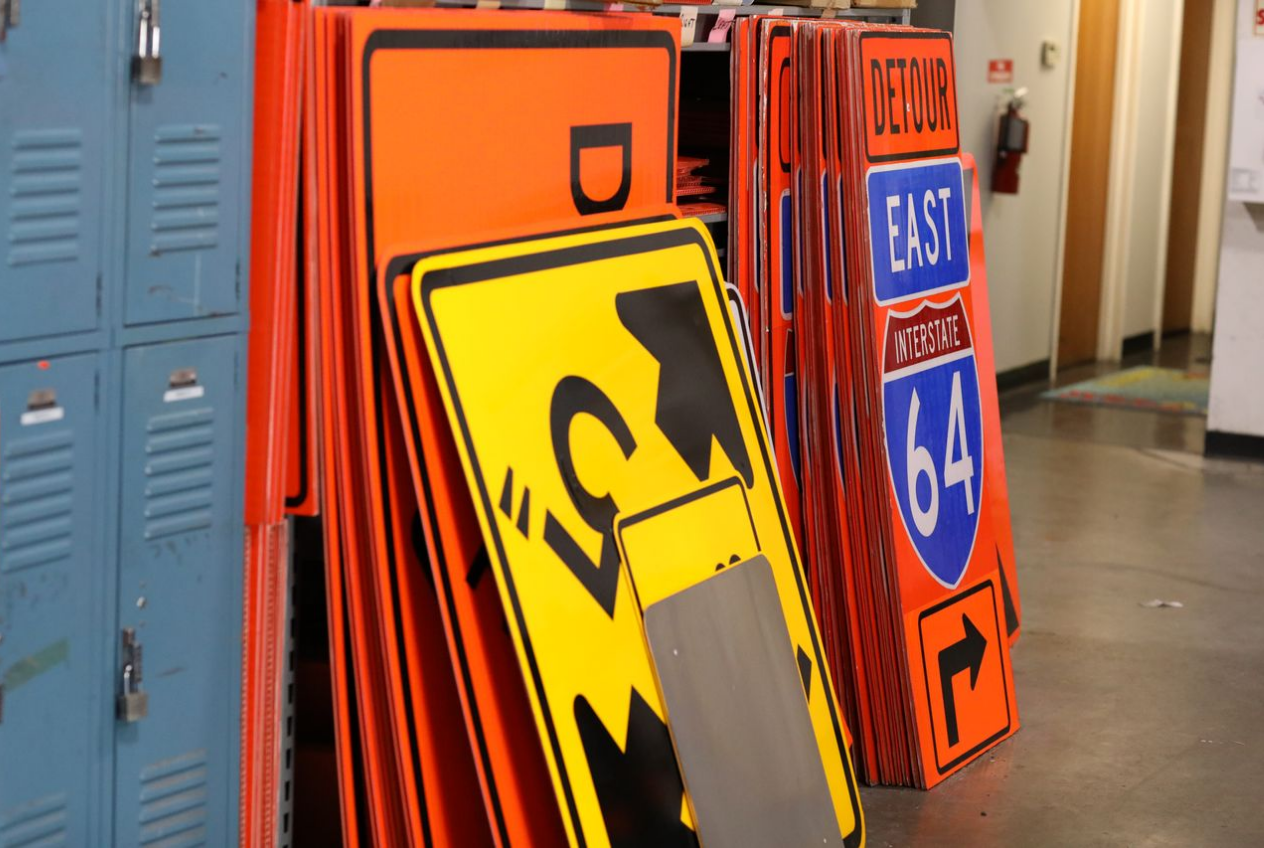
Traffic sign manufacturing plays an important role in keeping construction sites, roadwork areas, utility projects, and temporary traffic patterns safe and organized. The right signs help drivers understand what is changing, where to go, and how to move through or around a work zone safely.
For contractors, municipalities, and project managers, the bigger question is often whether to rent signs, buy signs, or order custom signs for a specific project. Each option has its place. The best choice depends on how long the signs will be needed, how often they will be used, what kind of project they support, and whether the message or design needs to be customized.
Traffic Sign Manufacturing, Sales, and Rentals: What’s the Difference?
Traffic signs can be handled in several ways depending on the needs of the project. Renting traffic signs is usually the best fit for temporary work zones, short-term closures, utility work, and projects where the sign package will only be needed for a limited time. Buying signs may make more sense for contractors, facilities, or municipalities that use the same signs repeatedly.
Custom traffic sign manufacturing comes into play when a project needs signage that is specific to a site, traffic pattern, safety requirement, facility, or work zone plan. This can include custom wording, directional signs, warning signs, regulatory-style signs, private property signs, or project-specific traffic control signs.
Spivey Services provides traffic control equipment rentals to support work zones and temporary traffic control setups across Virginia. For projects that need more than standard rental equipment, sign sales and custom sign manufacturing can help create a more complete traffic safety solution.
When Renting Traffic Signs Makes Sense
Traffic sign rental is often the most practical option for short-term projects. If your team needs signs for a lane closure, detour, utility repair, construction access point, or temporary traffic pattern, renting can help you get the equipment you need without storing it after the job is complete.
Rentals are especially useful when the sign package changes from project to project. A contractor working on a one-week utility repair may need different signs than a crew handling a multi-phase road project. Renting gives the project more flexibility and helps avoid buying signs that may not be used again.
Temporary traffic signs are also commonly used with cones, barricades, arrow boards, message boards, and other traffic control devices. If a project requires a broader setup, Spivey’s traffic control services can help coordinate the signs, equipment, and personnel needed to manage the work zone safely.
When Buying Traffic Signs Makes More Sense
Buying traffic signs can be a better option when the same signs will be used regularly. Municipalities, property managers, contractors with recurring work zones, industrial facilities, schools, and commercial sites may all benefit from keeping certain signs in their own inventory.
For example, a contractor that frequently handles roadwork or utility projects may use common warning, directional, or construction signs often enough that purchasing becomes more cost-effective over time. A facility may need permanent speed limit signs, parking signs, pedestrian signs, or access-control signs that will remain in place.
Buying also gives the owner more control over long-term availability. When signs are part of regular operations, having them on hand can reduce delays and simplify planning.
When Custom Traffic Sign Manufacturing Is Needed
Custom traffic signs are helpful when a standard sign does not fully match the project. This may happen when a site has a unique traffic pattern, a facility needs specific directions, or a work zone requires messaging tailored to the conditions on the ground.
Custom sign manufacturing can support construction entrances, temporary detours, private roads, jobsite safety rules, facility traffic flow, parking areas, delivery routes, and event access points. It can also be useful for contractors and municipalities that need signs built to match specific project requirements.
For traffic control, the value of custom signage is clarity. A driver, pedestrian, or worker should be able to understand the message quickly. Clear signs reduce confusion and help the overall work zone setup function more smoothly.
Compliance and Visibility Matter
Traffic signs need to be visible, readable, and appropriate for the setting. Size, color, reflectivity, wording, placement, and condition all matter. A sign that is hard to read, poorly placed, or not suited to the traffic pattern can create confusion instead of solving it.
For roadway and work zone projects, signage should be planned with applicable traffic control standards in mind. The Federal Highway Administration’s Manual on Uniform Traffic Control Devices defines national standards for traffic control devices used on streets, highways, pedestrian and bicycle facilities, and site roadways open to public travel.
In Virginia, projects may also need to account for VDOT requirements, local agency expectations, and approved traffic control plans. Working with a provider that understands temporary traffic control helps ensure signs are not treated as an afterthought.
How Signs Fit Into a Complete Traffic Control Setup
Signs are one piece of a larger traffic control system. On many projects, they work alongside cones, barrels, barricades, arrow boards, message boards, flaggers, and truck-mounted attenuators. The goal is to create a clear path for drivers and pedestrians while protecting crews working near active traffic.
That is why sign planning should be tied to the full work zone layout. The right sign in the wrong place may not solve the problem. A sign package should support the traffic control plan, lane closure, detour, or site access layout it is meant to guide.
Spivey’s traffic control support includes the equipment and practical planning needed to help work zones operate safely and efficiently. For contractors managing roadwork, utility work, municipal projects, or commercial construction, having signs and traffic control support under one roof can simplify coordination.
Choosing Between Renting, Buying, and Custom Signs
The best option usually comes down to the project’s timeline and repeat use. If the need is temporary, rental may be the cleanest choice. If the sign will be used regularly or installed long-term, buying may make more sense. If the project needs a specific message, layout, or sign type, custom manufacturing may be the right path.
It is also worth considering storage, maintenance, replacement, and compliance. Signs that are damaged, faded, outdated, or poorly suited to the project can create problems even if they are technically available. Renting from a traffic control provider can reduce that burden for short-term work. Buying or manufacturing signs can be useful when the need is ongoing and predictable.
Work With a Provider That Understands Traffic Control
Traffic signs may seem straightforward, but they have a direct effect on safety, traffic flow, and project organization. Choosing the right sign setup requires more than picking items from a list. It means understanding the work zone, the audience, the traffic pattern, and the duration of use.
Spivey Services supports contractors, municipalities, utilities, and infrastructure teams with traffic control services, equipment rentals, and sign solutions across Virginia. Whether your project needs temporary signs, signs for purchase, or custom traffic sign manufacturing, the right planning can help keep the job moving safely.
Get Traffic Signs for Your Project
If your project needs traffic sign manufacturing, rental signs, or traffic signs for sale, Spivey Services can help you determine the right option based on your project, timeline, and traffic control needs.
To discuss availability, custom sign needs, or traffic control equipment for your next project, visit Get a Quote.
Frequently Asked Questions
Should I rent or buy traffic signs?
Renting is usually best for short-term projects, temporary work zones, lane closures, and detours. Buying may make more sense when signs will be used repeatedly or installed for long-term use.
When do I need custom traffic sign manufacturing?
Custom signs are useful when a standard sign does not fit the project. This may include site-specific directions, private property signage, construction entrances, custom warnings, or project-specific traffic control messages.
What types of projects need temporary traffic signs?
Temporary traffic signs are commonly used for roadwork, utility repairs, construction access, lane closures, detours, municipal projects, and some events that affect traffic flow.
Do traffic signs need to follow MUTCD standards?
For roadways and public travel areas, traffic signs should be planned according to applicable standards, including MUTCD guidance and any relevant state or local requirements.