
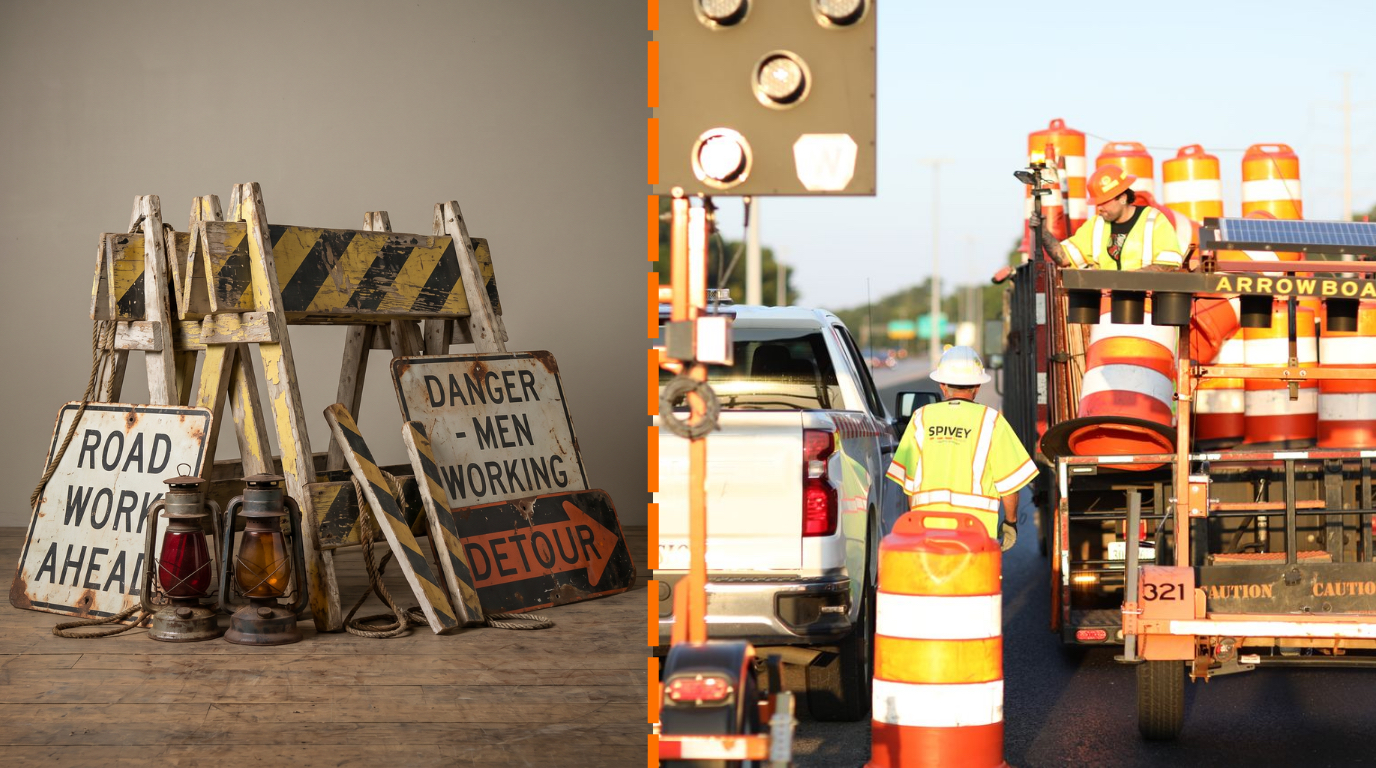
Traffic safety equipment has changed significantly over the years as roads have become busier, projects have become more complex, and work zones have needed better ways to protect crews and guide drivers. What began with basic signs and simple warnings has developed into coordinated traffic control systems that include signage, channelizing devices, message boards, arrow boards, barricades, attenuators, and trained field personnel.
For contractors, municipalities, utility providers, and infrastructure teams, this evolution matters. Modern traffic control is not just about having equipment on-site. It is about using the right devices in the right places so drivers understand what is happening before they reach the work area.
Traffic Safety Equipment Started With Basic Guidance
Early traffic control was built around a simple need: helping people understand where to go and what to expect. As automobile travel expanded, roads needed more consistent signs, signals, and markings. Without standardization, drivers could encounter different signs, meanings, colors, or layouts from one area to another.
The Federal Highway Administration’s history of the MUTCD explains how traffic control devices developed alongside modern road travel. In 1935, the first edition of the Manual on Uniform Traffic Control Devices was approved as a national standard. That was a major step toward creating consistent guidance for drivers across the country.
That early standardization still shapes how traffic safety equipment is used today. Whether the project involves a short lane closure or a long-term construction zone, drivers need recognizable signs and predictable patterns.
Why Standardization Changed Work Zone Safety
Standardization made traffic control more consistent and easier to understand. A sign, cone pattern, lane shift, or warning device should communicate quickly, especially when drivers are approaching a changing roadway condition at speed.
The current MUTCD edition is the 11th Edition with Revision 1, dated December 2025. The MUTCD sets national standards for traffic control devices, including signs, pavement markings, signals, and temporary traffic control devices.
In work zones, that consistency helps reduce confusion. Drivers have only a limited amount of time to recognize a hazard, process the message, and respond. Clear traffic control devices help create a safer environment for both workers and the traveling public.
The Rise of Modern Work Zone Safety Equipment
As construction and maintenance work became more frequent on active roads, work zones needed more than signs alone. Channelizing devices such as cones, drums, barrels, and barricades became common tools for guiding traffic through temporary patterns.
These devices help define the work area, separate drivers from crews, and show where vehicles should move. They are especially important during lane closures, shoulder closures, detours, and utility work where traffic patterns may change for a few hours, a few days, or several project phases.
Spivey Services provides traffic control equipment rentals for projects that need work zone safety equipment such as signs, barricades, arrow boards, message boards, and other temporary traffic control devices.
Better Visibility and Better Communication
One of the most important changes in traffic safety equipment has been the focus on visibility. Modern work zones often need to function in low light, bad weather, heavy traffic, and changing site conditions. Reflective materials, high-visibility signs, and properly maintained devices help drivers see and understand the work zone sooner.
Communication has also improved. Arrow boards can guide drivers through lane shifts and closures. Message boards can warn about delays, detours, changing traffic patterns, or upcoming work. These tools give drivers information earlier, which can reduce sudden braking, last-second merging, and confusion near the work area.
For projects in busy areas like Hampton Roads, Richmond, Chesapeake, and other Virginia corridors, early communication is especially important. A small amount of confusion can quickly become a larger traffic issue when roadways are already carrying heavy commuter, commercial, or construction-related traffic.
Protection Equipment for Crews
Traffic safety equipment has also evolved to better protect workers. Devices such as truck-mounted attenuators, barriers, buffer spaces, and properly planned lane closures help reduce exposure for crews working near active traffic.
Truck-mounted attenuators are often used to help protect workers and equipment in mobile or temporary operations. They are one part of a larger work zone setup, along with warning signs, channelizing devices, flaggers, and proper traffic control planning.
Protection equipment works best when it is planned as part of a complete system. A device placed in the wrong location or used without proper advance warning may not provide the intended benefit. Field experience matters because work zones change quickly once traffic, equipment, crews, and weather enter the picture.
Virginia Work Zones Have Their Own Requirements
In Virginia, traffic safety equipment must also fit state requirements and project conditions. VDOT’s Virginia Work Area Protection Manual provides current requirements for the design, application, and implementation of temporary traffic control devices on VDOT roadways.
This matters because work zone safety is not only about choosing equipment. It is about choosing equipment that matches the roadway, speed, traffic volume, work activity, duration, and authority having jurisdiction. A setup for a low-speed municipal street will look different from a setup on a higher-speed corridor or a multi-phase infrastructure project.
Today’s Work Zones Need Coordinated Systems
Modern traffic safety equipment works best when each part supports the rest of the system. Signs warn drivers before they reach the work area. Cones, drums, and barricades guide movement. Arrow boards and message boards communicate changing conditions. Flaggers provide real-time direction where drivers need active guidance. Attenuators and other protective devices help reduce risk near active traffic.
Spivey’s traffic control services are built around this kind of coordinated planning. The goal is to create a work zone that is clear, practical, compliant, and manageable in the field.
For contractors and project managers, this can simplify the job. Instead of piecing together equipment, crews, and planning separately, a full-service provider can help make sure the setup works as a complete traffic control system.
Choosing the Right Traffic Safety Equipment for a Project
The right traffic safety equipment depends on what the project is doing and how it affects traffic. Short-term utility work may need signs, cones, and flaggers. A lane closure may require advance warning signs, channelizing devices, arrow boards, and a planned taper. A larger road construction project may need message boards, barricades, attenuator trucks, detour support, and ongoing adjustments as the job progresses.
Spivey’s traffic control solutions can support projects that need more than equipment delivery. That includes planning, setup, rentals, certified crews, and adjustments based on project conditions.
If your project also needs custom signs, rental signs, or signs for purchase, Spivey can support traffic sign needs as part of the larger traffic control plan.
Get Traffic Safety Equipment for Your Work Zone
Traffic safety equipment has evolved from basic signs into coordinated systems that improve visibility, communication, and crew protection. For today’s work zones, the equipment needs to be selected, placed, and maintained with care.
If your project needs traffic control equipment, work zone safety planning, lane closure support, or traffic control services, Spivey Services can help you build the right setup. To discuss your project or request pricing, visit Get a Quote.
Frequently Asked Questions
What is traffic safety equipment?
Traffic safety equipment includes the signs, cones, barricades, drums, arrow boards, message boards, attenuators, and other devices used to guide drivers and protect crews in work zones or temporary traffic control areas.
How has traffic safety equipment changed over time?
Traffic safety equipment has become more standardized, visible, and coordinated. Early traffic control relied heavily on basic signs and markings, while modern work zones often use a full system of signs, channelizing devices, electronic boards, protective equipment, and trained personnel.
Why does MUTCD guidance matter for traffic safety equipment?
The MUTCD establishes national standards for traffic control devices. These standards help make work zones more consistent and predictable for drivers, which supports safer temporary traffic control.
Can traffic control equipment be rented?
Yes. Many projects rent traffic control equipment such as signs, barricades, arrow boards, message boards, cones, drums, and other work zone devices based on project scope and duration.