
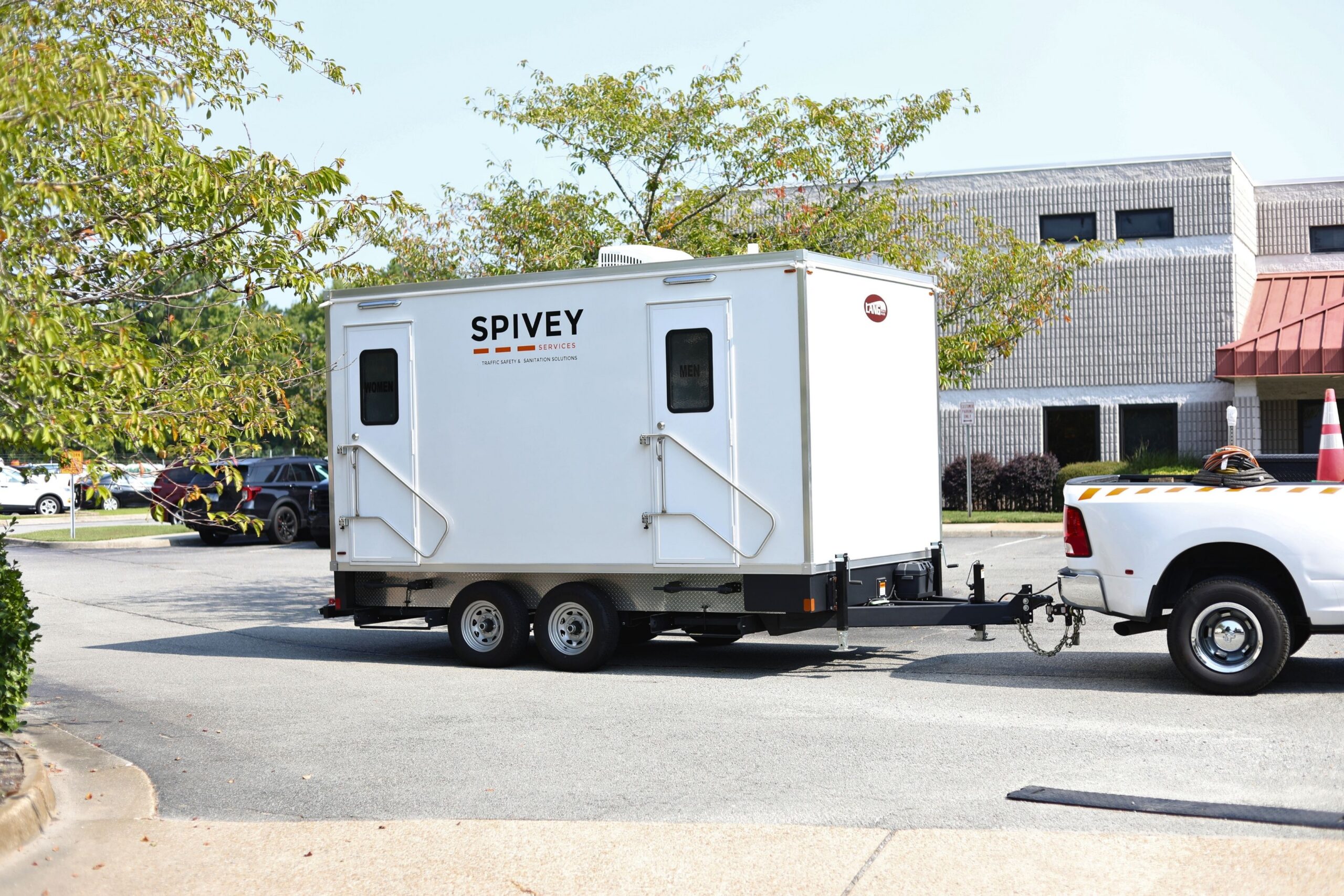
Restroom trailer rental becomes the better option when standard portable toilet setups no longer match the needs of your project or event. Portable toilets are effective for basic sanitation, but there are situations where guests, crews, or site conditions require something more complete.
Construction managers, event planners, and municipalities often reach that point when expectations around comfort, duration, or capacity increase. In those cases, restroom trailers provide a more functional solution that supports both usability and overall site logistics.
When Portable Toilets Are No Longer Enough
Portable toilet rental works well for short-term use, smaller crews, and events where basic access is all that is needed. However, as the scope of a project grows, limitations start to show up. Lines become longer, sanitation becomes harder to maintain, and the overall experience can suffer.
Restroom trailers are typically used when an event has a higher attendance level, when a job site runs for an extended period, or when a more controlled indoor-style environment is expected. Weddings, festivals, corporate events, and long-term construction sites are common examples.
Unlike standard units, restroom trailers provide flushing toilets, running water, lighting, and climate control. That difference becomes noticeable quickly, especially during longer events or in extreme weather conditions.
What Goes Into a Restroom Trailer Setup
One of the biggest differences between restroom trailer rental and porta potty rental is the setup. A restroom trailer is a self-contained system, but it still requires the right utilities to operate properly.
Power is one of the most important factors. Each trailer typically requires dedicated electrical circuits to run lighting, water systems, and climate control. Without sufficient power, equipment such as air conditioning units may not function correctly or may trip breakers during use.
Water supply is another key consideration. Most restroom trailers connect to a standard water source using a hose with adequate pressure. Some units include onboard freshwater tanks, which allow for more flexibility when a direct connection is not available.
Waste is stored in a built-in holding tank beneath the trailer and is serviced by a pumper truck as needed. This allows the unit to operate independently without relying on a direct sewer connection.
These requirements are straightforward when planned in advance, but they are often overlooked by first-time renters. Understanding these details helps avoid issues during setup and ensures the trailer operates as expected throughout the rental period.
Where Restroom Trailers Make the Most Sense
Restroom trailers are commonly used in situations where comfort, cleanliness, and reliability matter more than minimal setup. Outdoor weddings and private events are a typical example, where guests expect a cleaner and more private restroom environment.
They are also widely used on construction sites that operate for weeks or months at a time. Crews working long shifts benefit from a more consistent and sanitary setup, especially when access to facilities is limited.
Municipal projects, disaster response operations, and temporary facilities also rely on restroom trailers when standard portable toilet rental is not sufficient for the conditions on site.
Planning for a Smooth Rental
The success of a restroom trailer setup often comes down to planning. Before delivery, it is important to confirm that the site has access to power and water, or that alternative solutions such as generators or onboard tanks are available.
Before delivery, it is important to confirm that the site has access to power and water, or that alternative solutions such as generators or onboard tanks are available. Following general sanitation and site preparation guidelines, such as those outlined by the Occupational Safety and Health Administration, can help ensure facilities are set up safely and function as expected.
Placement is another factor. The trailer should be located on stable, level ground with enough space for both users and service access. Distance from utilities also matters, as long runs for power or water can affect performance.
Working with an experienced provider helps avoid these issues. A professional team can evaluate the site, recommend the right trailer configuration, and ensure the unit is set up correctly from the start.
Spivey Services provides site services and sanitation solutions throughout Virginia, including restroom trailer rental, portable toilet rental, and support for large-scale events and construction projects.
Choosing the Right Sanitation Solution
Every project has different requirements. Some sites only need basic portable toilets, while others require a more complete setup that includes running water, climate control, and higher capacity.
Restroom trailer rental fills that gap. It provides a more controlled environment that works well for longer durations, higher traffic, and situations where expectations are higher.
If you are planning an event or managing a job site, taking the time to choose the right sanitation setup can prevent problems later and create a smoother experience for everyone involved.
To discuss your project or get help selecting the right equipment, you can request a quote from Spivey Services.
FAQ
What is included in a restroom trailer rental?
Restroom trailers typically include flushing toilets, sinks with running water, lighting, and climate control. They function more like a traditional indoor restroom compared to standard portable units.
Do restroom trailers need power and water?
Yes, most restroom trailers require a power source and a water connection to operate. Some units also have onboard tanks for added flexibility when utilities are limited.
When should I rent a restroom trailer instead of portable toilets?
Restroom trailers are a better option for longer events, higher guest expectations, or job sites that require a more comfortable and consistent sanitation setup.
Can restroom trailers be used on construction sites?
Yes, restroom trailers are commonly used on long-term construction projects where crews need reliable and higher-quality restroom facilities.