
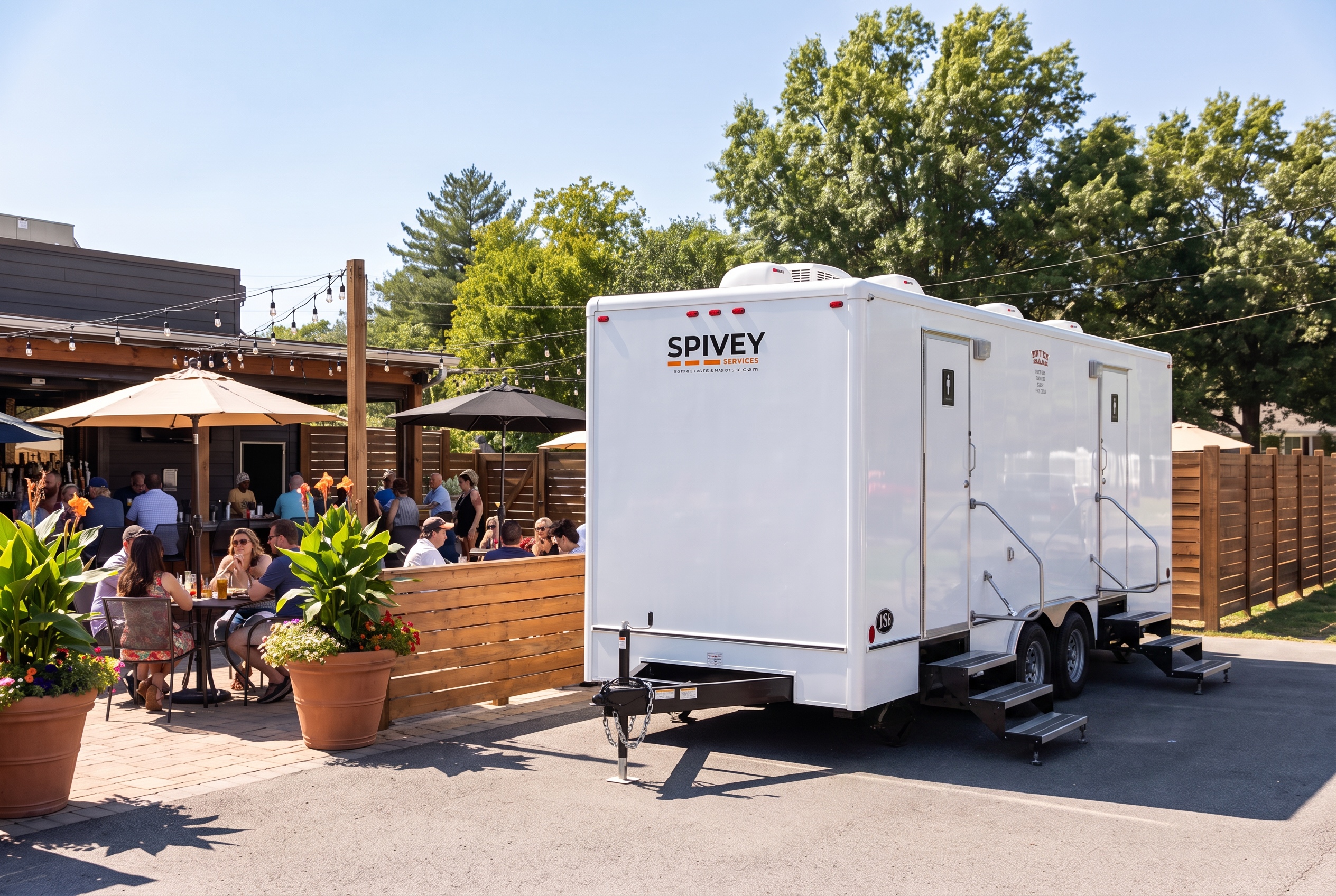
Restroom Trailer Rental Uses: Events, Seasonal Venues, Worksites, and Temporary Facilities
Restroom trailer rental is a practical option when a site needs more comfort, capacity, or convenience than standard portable toilets can provide. These trailers are often used for events, seasonal venues, worksites, renovations, and temporary facilities where guests, crews, or visitors need access to a cleaner and more complete restroom setup.
They are not the right fit for every location, though. Restroom trailers need the proper setup conditions, including power, water, level placement, and service access. When those details are planned correctly, they can be a strong solution for a wide range of temporary restroom needs.
Restroom Trailer Rental Is About Comfort and Capacity
A restroom trailer offers a more finished experience than a basic portable restroom. Depending on the trailer, users may have access to flushing toilets, sinks, lighting, mirrors, interior space, climate control, and separate entrances. That makes trailers especially useful for public-facing events, longer rentals, and settings where appearance matters.
Spivey Services offers restroom and shower trailer rentals for temporary sanitation needs across Virginia. Our options include small-to-medium restroom trailers, medium-to-large restroom trailers, an ADA wheelchair-accessible restroom trailer, and separate shower trailer options.
The main advantage is that a restroom trailer feels closer to a permanent facility. For many sites, that added comfort helps improve the experience for guests, workers, vendors, and staff.
Events, Weddings, Concerts, and Festivals
Events are one of the most common uses for restroom trailers. Weddings, concerts, festivals, fundraisers, corporate gatherings, school functions, sporting events, and municipal celebrations often need restrooms that feel more polished than standard portable toilets.
For weddings and private events, restroom trailers can better match the tone of the occasion. Guests may be dressed formally, staying for several hours, and expecting access to sinks, lighting, mirrors, and a more comfortable interior. For concerts and festivals, restroom trailers may be used in VIP areas, performer zones, staff areas, or sponsor spaces while standard portable toilets support larger crowd areas.
For events with food vendors or outdoor dining, additional hygiene support may also be useful. Spivey’s hand wash station rental options can help support food service areas, restroom banks, and other high-traffic locations.
Seasonal Venues and Outdoor Businesses
Restroom trailers can also work well for seasonal venues and outdoor businesses. This includes breweries, wineries, farms, outdoor bars, event lawns, pumpkin patches, corn mazes, fairs, marinas, markets, school stadiums, and other places that see higher traffic during certain seasons.
In some cases, the property may have permanent restrooms but not enough capacity during peak periods. A busy outdoor venue may need overflow restroom support during warm weather, tourist season, event weekends, or special programming. A restroom trailer can help reduce pressure on indoor facilities while giving guests a more comfortable option than a basic portable toilet.
This can be especially helpful when the outdoor area is far from the main building, when guests are spread across a large property, or when the venue wants the restroom setup to feel more intentional and guest-friendly.
Worksites, Renovations, and Temporary Facilities
Restroom trailers are not only for events. They can also support construction sites, commercial renovations, municipal projects, temporary offices, industrial facilities, and long-term worksites where crews or visitors need a better restroom option.
For a rugged short-term job, standard portable toilet rentals may be the most practical choice. For longer projects, office trailer areas, public-facing sites, or jobs where employees are on-site for extended shifts, a restroom trailer may provide a more comfortable setup.
Restroom trailers can also be useful during building renovations when permanent restrooms are unavailable. Businesses, schools, municipal buildings, industrial facilities, and commercial properties may need temporary restroom access while plumbing work, remodeling, or repairs are underway.
Utility Requirements Matter Before You Book
Restroom trailers require more planning than standard portable toilets. Before booking, the site should be checked for utilities, placement, and service access. A trailer should be placed in a level, dry, well-drained area with enough space for delivery and servicing.
Power is one of the most important requirements. Spivey recommends providing each restroom trailer with at least two independent, dedicated 20-amp power circuits. If a winter package with electrical heaters is used, additional power may be required. A dedicated circuit means no other equipment or devices should draw electricity from the same circuit.
Water is also required. Every restroom trailer needs a garden hose with minimum water pressure of 40 psi and a flow rate of 5 gallons per minute. A standard three-quarter-inch garden hose supplies pressurized fresh water for the toilets and sinks. Every Spivey Services restroom trailer is equipped with a city water connection located beneath the mechanical room.
Wastewater planning matters as well. Restroom trailers include waste tanks, and long-term rentals need service access so a pumper truck can reach the trailer. For some sites, holding tanks or related sanitation support may be part of the larger plan.
When a Restroom Trailer May Not Be the Best Fit
Restroom trailers are versatile, but they are not always the simplest option. Very remote sites, utility-poor locations, soft or uneven ground, and areas without service access may create challenges unless power, water, waste handling, and delivery access are planned in advance.
For example, a remote campground, disaster response area, or temporary lodging site may still be able to use a restroom trailer, but only if generators, water supply, service access, and wastewater management are handled properly. Without those pieces, standard portable toilets and hand wash stations may be more practical.
This is why it is important to describe the site honestly when planning a rental. A provider can help determine whether a restroom trailer makes sense or whether another portable sanitation setup will work better.
Pairing Restroom Trailers With Other Sanitation Equipment
Many temporary sites need more than one type of sanitation equipment. A restroom trailer may serve the main guest or crew area, while standard portable toilets cover remote parts of the property. Hand wash stations may support food vendors, restroom banks, outdoor work areas, or entrances.
Spivey also offers toilet accessories that can help support cleaner and more organized sanitation setups. Depending on the event or site, accessories may improve hygiene, protect surfaces, or help equipment function more smoothly during heavy use.
For sites that need bathing facilities, Spivey offers separate shower trailer options, including a 6-station shower trailer and an 8-station shower trailer. For accessible restroom needs, Spivey also offers an ADA wheelchair-accessible restroom trailer.
Accessibility Should Be Part of the Planning Conversation
For public events, schools, municipal sites, commercial venues, and other public-facing settings, accessibility should be considered early. Restroom selection, placement, ground conditions, ramps, pathways, and distance from main activity areas can all affect whether the setup works well for guests.
The ADA Standards for Accessible Design explain what is required for buildings and facilities to be physically accessible to people with disabilities. Every temporary site has its own conditions, but accessibility planning should not be left until the final layout is already set.
Choosing the Right Setup
The right restroom trailer setup depends on the number of people using it, how long it will be needed, whether the site is guest-facing or crew-facing, and what utilities are available. Event planners should consider the tone of the event, food and beverage service, crowd flow, and accessibility. Contractors and facility managers should think about crew size, project duration, water access, power access, and service schedules.
It also helps to think about whether the trailer is solving a comfort issue, a capacity issue, or a temporary facilities issue. A wedding venue may need a nicer guest experience. A brewery may need seasonal overflow. A renovation project may need temporary restrooms while indoor plumbing is offline. Each use case points toward a different setup.
Plan Your Restroom Trailer Rental
Restroom trailer rental can be a strong option for events, seasonal venues, worksites, renovations, and temporary facilities when the site can support the utilities and service access required. With the right planning, a restroom trailer can improve comfort, capacity, and convenience for guests, workers, vendors, and staff.
Spivey Services can help you choose the right restroom trailer, portable toilet setup, hand wash stations, holding tanks, shower trailers, or accessories for your project. To check availability or request pricing, visit Get a Quote.
Frequently Asked Questions
What are restroom trailers commonly used for?
Restroom trailers are commonly used for weddings, concerts, festivals, seasonal venues, outdoor businesses, construction sites, renovations, temporary offices, municipal events, fairs, farms, breweries, wineries, and other temporary facilities.
Do restroom trailers need power and water?
Yes. Restroom trailers typically need dedicated electrical power and a pressurized water connection. Spivey recommends at least two independent, dedicated 20-amp circuits and a garden hose with at least 40 psi and 5 gallons per minute flow. Every Spivey Services restroom trailer is equipped with a city water connection located beneath the mechanical room.
Are restroom trailers good for remote sites?
They can be used at remote sites only when power, water, wastewater service, level placement, and truck access are planned in advance. In some remote locations, standard portable toilets and hand wash stations may be more practical.
Does Spivey offer ADA restroom trailers or shower trailers?
Yes. Spivey offers an ADA wheelchair-accessible restroom trailer. Spivey also offers separate 6-station and 8-station shower trailers for sites that need bathing facilities.